Do I need a SWMS? The 18 high-risk activities

A SWMS isn't required for every job - only for High-Risk Construction Work. Here's the exact list, so you know in 30 seconds whether your work needs one.
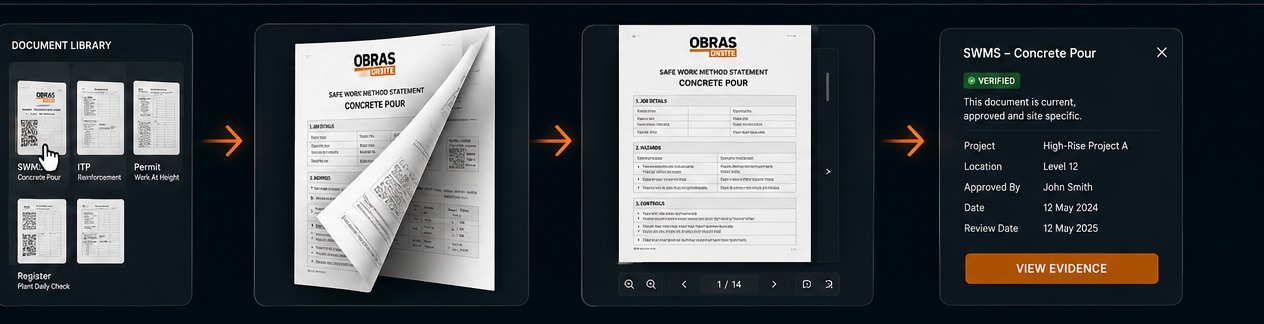
A real Obras SWMS - preview every page and verify it is the current, approved, site-specific revision
A real Obras SWMS — editable, QR-verified and ready to brand as your own. Browse the SWMS library →
Guides › Do I need a SWMS?

Under the model Work Health and Safety (WHS) Regulations, a Safe Work Method Statement (SWMS) must be prepared whenever you do High-Risk Construction Work (HRCW). The Regulations define exactly 18 activities as high-risk. If your job involves any one of them, you legally need a SWMS before work starts.

The 18 high-risk construction work activities

You need a SWMS if the construction work:

  1. Involves a risk of a person falling more than 2 metres
  2. Is carried out on a telecommunication tower
  3. Involves demolition of a load-bearing element of a structure
  4. Involves, or is likely to involve, the disturbance of asbestos
  5. Involves structural alterations or repairs that require temporary support to prevent collapse
  6. Is carried out in or near a confined space
  7. Is in or near a shaft or trench deeper than 1.5 m, or a tunnel
  8. Involves the use of explosives
  9. Is carried out on or near pressurised gas mains or piping
  10. Is carried out on or near chemical, fuel or refrigerant lines
  11. Is carried out on or near energised electrical installations or services
  12. Is in an area that may have a contaminated or flammable atmosphere
  13. Involves tilt-up or precast concrete
  14. Is on, in or adjacent to a road, railway or other traffic corridor in use
  15. Is in an area with movement of powered mobile plant
  16. Is in an area with artificial extremes of temperature
  17. Is in or near water or other liquid with a risk of drowning
  18. Involves diving work
Quick rule of thumb: heights, trenches, confined spaces, live electrical, asbestos, demolition, traffic, mobile plant, tilt-up/precast - if any of those are in play, you need a SWMS. When in doubt, do one anyway: it's cheap insurance and inspectors love to see it.

Who prepares it, and when?

The PCBU (the business doing the high-risk work - that's you, the contractor or subbie) must prepare the SWMS in consultation with the workers doing the job. It has to be ready before the work starts, the work must be done the way the SWMS says, and a copy must be kept on site and available to workers and inspectors.

What about Victoria?

Victoria runs under the OHS Regulations 2017 rather than the WHS laws, but the requirement is the same in practice: a SWMS is required for high-risk construction work. Our documents come in state versions for QLD, NSW, VIC, SA and WA.

Get the right SWMS in minutes

We've got a ready-to-brand SWMS for every one of these high-risk activities - working at heights, excavation & trenching, confined space entry, asbestos removal, demolition, electrical work and 190+ more. Add your logo, fill in your site details, get it signed off, and you're ready for site.

Find your SWMS

200 trades and high-risk activities covered - editable Word + PDF, WHS-aligned, ready for your logo.
Browse the SWMS library