A Safe Work Method Statement, explained without the jargon - what it is, what goes in it, and what the law actually asks of you.
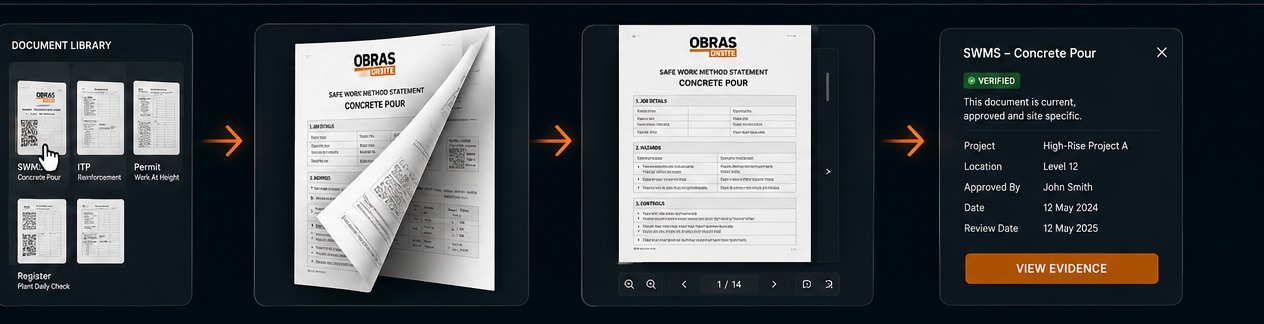
A SWMS - Safe Work Method Statement - is a document that sets out the high-risk construction work to be carried out, the hazards that come with it, and the control measures you'll use to keep people safe. It also says how those controls will be put in place, monitored and reviewed.
In plain English: it's the written plan for how a high-risk job will be done safely - agreed before the work starts, and followed by everyone on the tools.
A compliant SWMS sets out:
Good SWMS also reference the relevant legislation, Codes of Practice and Australian Standards for the task.
The PCBU (person conducting the business or undertaking) doing the high-risk work prepares the SWMS, in consultation with the workers who'll carry it out. It must be done before the work starts, kept on site, and followed.
No - a SWMS is only legally required for High-Risk Construction Work. There are 18 activities that trigger it. See the full list in our "Do I need a SWMS?" guide →
Keep the SWMS until the work is finished. If it relates to a notifiable incident, keep it for at least two years. Review and update it whenever the work, site, plant or crew change, after any incident, or when the law changes.
That's exactly what we do. Our SWMS library covers 200 trades and high-risk activities - each one professionally written, WHS-aligned and ready for your logo. Or learn how to fill one in properly →
200 trades covered - editable Word + PDF, colour-coded risk ratings, on your site in minutes.